
French Bulldog: Breed Profile, Temperament, Care, & Facts
Overview
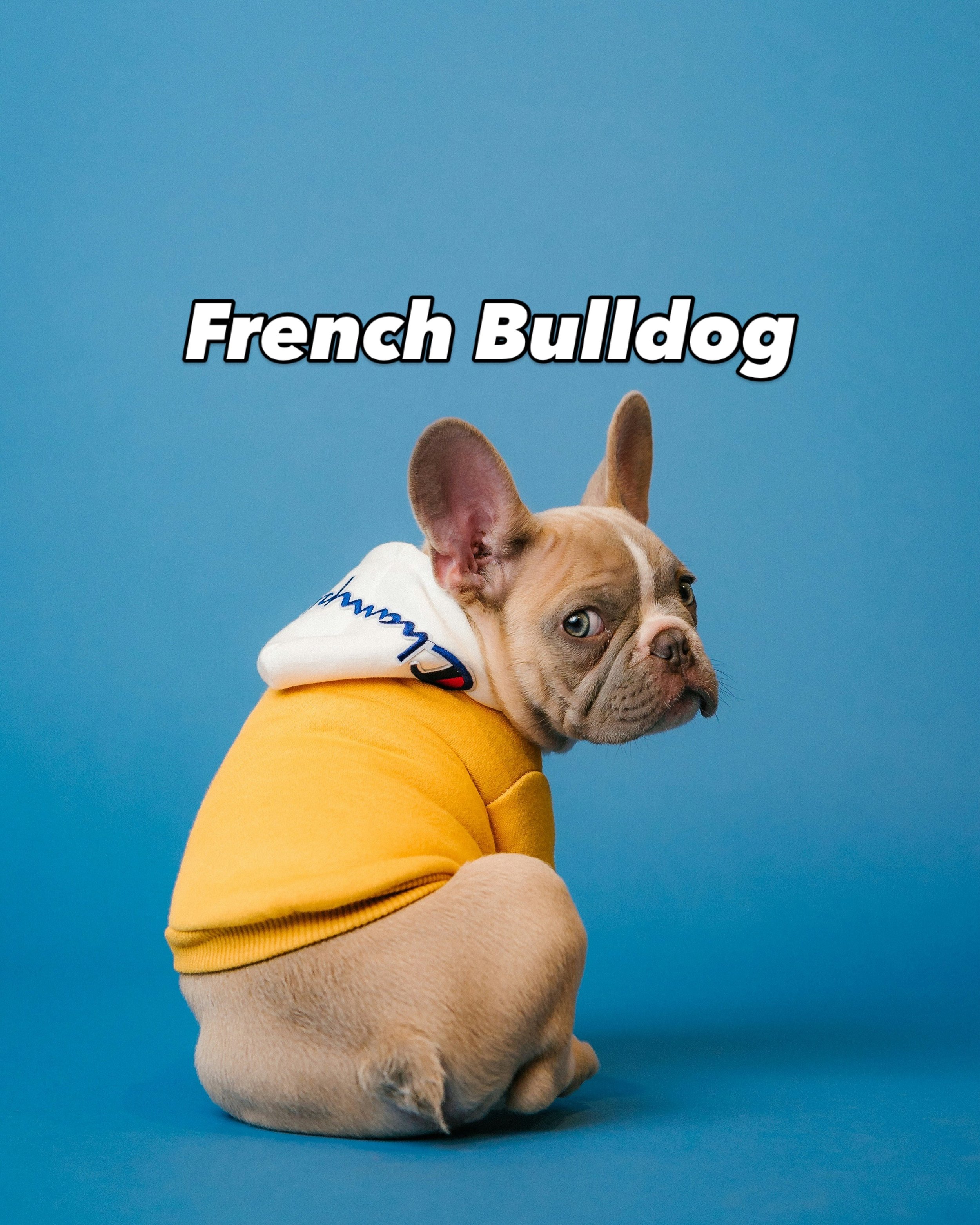
The French Bulldog has taken the dog world by storm. In recent years the Frenchie dethroned the Labrador Retriever as the most popular dog breed in America — a title the Lab had held for over three decades. It's not hard to see why. Those enormous bat ears, that smooshed expressive face, the compact muscular body, and a personality that is equal parts clown and devoted companion make the French Bulldog one of the most irresistible dogs on the planet. But the Frenchie comes with some very important considerations that every prospective owner needs to understand before falling completely in love. This is a breed that rewards its owners enormously — and asks for real commitment in return.
Quick Facts
Breed Type: Purebred / Non-Sporting Group
Origin: England / France
Size: Small
Weight: Under 28 lbs
Height: 11–13 inches
Lifespan: 10–12 years
Coat: Short, smooth, fine
Energy Level: Low to Moderate
Good with Kids: ✅ Yes
Good with Other Dogs: ✅ Generally yes
AKC Recognized: Yes (1898)
History
Despite the name, the French Bulldog actually originated in England. In the early 1800s, lace workers in Nottingham kept miniaturized versions of the English Bulldog as companion dogs and ratters. When the Industrial Revolution disrupted the lace-making trade, many of these workers emigrated to northern France — and they brought their small bulldogs with them.
In France, the breed found an enthusiastic new audience. French breeders refined the dogs further, crossing them with terriers and Pugs, and the distinctive upright bat ears — a trait American breeders would later champion over the rose ears preferred by some English breeders — became the breed's signature look. The Frenchie quickly became fashionable across French society, associated with Parisian café culture and admired by artists including Edgar Degas and Henri de Toulouse-Lautrec, who featured dogs resembling the French Bulldog in their paintings.
American tourists discovered the breed in France in the late 1800s and brought it back to the United States, where it became an instant sensation among high society. The French Bull Dog Club of America was founded in 1897 and the AKC officially recognized the breed in 1898. The Frenchie's popularity has only grown since — and the past decade has seen an explosion in demand that has unfortunately also brought with it a rise in irresponsible breeding practices that prospective buyers need to be aware of.
One famous historical footnote: a champion French Bulldog was aboard the Titanic in 1912, insured for the then-remarkable sum of $750. The dog did not survive.
Temperament
The French Bulldog is a true companion dog through and through. Affectionate, playful, people-oriented, and deeply devoted, Frenchies thrive on human contact and want nothing more than to be wherever you are. They are famously adaptable — equally happy in a city apartment or a country home, with a single person or a large family — as long as their people are close by.
Frenchies have a well-earned reputation for being entertaining. They are curious, mischievous, and have a genuine sense of humor. They love to play, love to cuddle, and love to be the center of attention. They are not a breed that tolerates being ignored or left alone for long periods — separation anxiety is a real concern with this breed, and a bored or lonely Frenchie will find creative and often destructive ways to let you know about it.
Training a Frenchie is a study in gentle persistence. They are intelligent and capable learners, but they are also free thinkers with a stubborn streak. Training sessions need to feel fun, game-like, and reward-based. Frenchies respond beautifully to praise, treats, and play — and will dig their heels in stubbornly if training feels repetitive or punitive. Patience and consistency are the keys to a well-trained French Bulldog.
One important note: French Bulldogs are not big barkers, which makes them excellent apartment dogs. They tend to bark only when genuinely excited or alarmed. What they do with enthusiasm, however, is snort, grunt, wheeze, and snore — sounds that Frenchie owners tend to find endearing rather than annoying, once they adjust.
Size & Weight
The French Bulldog is a compact, heavily muscled little dog that is built, as one description memorably puts it, like a small tank. Adults typically weigh under 28 pounds and stand 11 to 13 inches tall at the shoulder. Males and females are similar in size. Despite their small stature, Frenchies are dense and surprisingly heavy for their height — something first-time owners often notice when picking one up.
The breed's most iconic physical features include their large, upright bat ears — which occur naturally and are never cropped — a broad square head with a flat, shortened muzzle, a compact muscular body, short bowed legs, and a short screw or straight tail. Their skin is loose and soft, forming wrinkles around the head and shoulders.
French Bulldogs come in a wide range of coat colors including fawn, brindle, cream, white, and pied (white with colored patches). In recent years, so-called "exotic" color variations like blue, merle, lilac, and chocolate have become popular — but these colors are not recognized by the AKC breed standard and are often associated with additional health risks and unethical breeding practices. Stick to reputable breeders who breed within the recognized standard.
Exercise Needs
This is one area where the French Bulldog is genuinely low-maintenance — and one of the many reasons they are so popular with apartment dwellers and city residents. Frenchies have modest exercise needs. A couple of short walks of around 15 minutes each per day, plus some indoor play, is generally sufficient to keep a French Bulldog happy and healthy.
That said, exercise for a French Bulldog comes with very important limitations. Their flat face — a result of their brachycephalic anatomy — significantly restricts their ability to breathe efficiently. This means Frenchies overheat quickly, tire easily during physical exertion, and can get into serious respiratory distress if pushed too hard. Exercise should always be calm and moderate, particularly in warm weather.
Key rules for exercising a French Bulldog:
Never exercise in hot or humid weather — early morning or evening outings only in summer
Keep walks short and relaxed — this is not a jogging companion
Watch for heavy panting, slowing down, or labored breathing as signs of overexertion
Always have fresh water available
Never leave a Frenchie in a hot car, even briefly
French Bulldogs are also not swimmers. Their front-heavy build and compact body make them unable to stay afloat, and they can drown quickly. Any home with a pool or water feature needs appropriate safety barriers.
Grooming
The French Bulldog is one of the easier breeds to groom — their short, smooth coat requires minimal maintenance. A weekly brushing with a soft bristle brush keeps the coat clean and shiny and removes loose hair. Frenchies are moderate shedders year-round, with slightly heavier shedding in spring and fall.
Bathing is needed approximately once a month using a gentle dog shampoo. The most important — and often overlooked — part of French Bulldog grooming is cleaning the facial wrinkles. Skin folds trap moisture, dirt, and bacteria, which can quickly lead to painful skin fold dermatitis and infections if not cleaned and dried regularly. Wipe the wrinkles daily with a dog-safe wipe or damp cloth and make sure they are thoroughly dry afterward.
Regular grooming also includes:
Nail trimming every three to four weeks
Ear cleaning weekly — Frenchies' large open ears collect debris easily
Eye cleaning — gently wipe any discharge from the eyes regularly
Teeth brushing several times a week — dental disease is very common in the breed due to their shortened jaw and teeth crowding
Tail pocket cleaning if present — some Frenchies have a skin fold around the base of their tail that needs daily attention
Health Issues
This is the most important section of any French Bulldog profile — and the one that deserves the most honest attention. The French Bulldog is a breed with a significant health burden, much of it directly tied to the physical traits that make them so appealing. Prospective owners need to go in with clear eyes and a realistic budget for veterinary care.
Brachycephalic Obstructive Airway Syndrome (BOAS) — The most serious and widespread health concern in the breed. The French Bulldog's flat face comes with narrowed nostrils, an elongated soft palate, and a narrowed windpipe — a combination that restricts airflow and makes breathing genuinely difficult for many dogs. Signs include loud breathing, snoring, frequent snorting, exercise intolerance, and in severe cases, blue-tinged gums from lack of oxygen. Corrective surgery is available and can significantly improve quality of life. All prospective Frenchie owners should have their dog evaluated for BOAS by a vet familiar with brachycephalic breeds.
Spinal Issues (IVDD and Hemivertebrae) — French Bulldogs are prone to intervertebral disc disease and hemivertebrae — abnormally shaped vertebrae that can cause spinal cord compression, pain, and in severe cases, paralysis. Signs include weakness in the hind legs, reluctance to jump, and changes in gait.
Skin Fold Dermatitis — Infections in the facial and body skin folds are extremely common and require daily preventive care. Left untreated they can become serious and painful.
Hip Dysplasia — Despite their small size, French Bulldogs are susceptible to hip dysplasia, which causes joint pain and mobility issues over time.
Eye Conditions — The prominent eyes of the Frenchie are vulnerable to corneal ulcers, cherry eye, and other issues. Any redness, cloudiness, or discharge warrants a prompt vet visit.
Skin Allergies — French Bulldogs have higher rates of environmental and food allergies than most breeds, leading to itchy skin, recurring ear infections, and coat issues.
Dental Disease — A shortened jaw means crowded teeth and accelerated tartar buildup. Regular professional dental cleanings and home dental care are essential.
Heat Sensitivity — Due to BOAS, Frenchies cannot regulate their body temperature effectively through panting. Overheating can become a life-threatening emergency very quickly.
A note on breeding: the surge in French Bulldog popularity has unfortunately driven a rise in irresponsible breeding that prioritizes appearance and exotic colors over health. Always choose a reputable breeder who health tests both parents, screens for BOAS, and breeds dogs with as functional anatomy as possible. Avoid breeders who cannot provide health documentation or who breed for extreme flat faces, exotic colors, or unusually small size.
Lifespan
The average French Bulldog lives 10 to 12 years — shorter than many breeds of similar size, largely due to the health challenges associated with their conformation. Dogs from health-tested lines with more functional anatomy tend to live longer, healthier lives. Dogs with severe BOAS, spinal issues, or other conformation-related problems may have significantly reduced quality of life and lifespan.
Who Is the French Bulldog Best For?
Despite the health considerations, the right Frenchie from a responsible breeder can be a wonderful, joyful companion. This breed is an excellent fit for:
✅ Apartment and city dwellers — perfectly sized, low exercise needs, minimal barking
✅ Individuals and couples who want a devoted, affectionate companion
✅ Families with children — gentle, patient, and playful with kids of all ages
✅ People who work from home or are home often — Frenchies need human company
✅ Those who want a low-maintenance coat — short and easy to care for
✅ Owners prepared for veterinary costs — the most responsible Frenchie owners budget carefully for health care
The French Bulldog is not the best fit for:
❌ Very active owners wanting a jogging or hiking companion
❌ Those in hot, humid climates without reliable air conditioning
❌ Anyone unprepared for significant potential veterinary expenses
❌ Owners who travel frequently and need a breed that can fly in cargo — most airlines prohibit brachycephalic breeds in the hold
❌ First-time owners unfamiliar with brachycephalic breed needs
❌ Homes without pool safety barriers — Frenchies cannot swim
Love the French Bulldog? Explore similar breeds: English Bulldog, Boston Terrier, Pug, French Bulldog Mixes
